SDLC (Software Development Life Cycle)
Skilled in managing carrier-grade ISP infrastructure, enterprise environments, and server operations. Enthusiastic about optimizing high-performance networks and exploring emerging technologies. Committed to continuous learning and driven to leverage cloud solutions and automation tools to enhance innovation and efficiency.
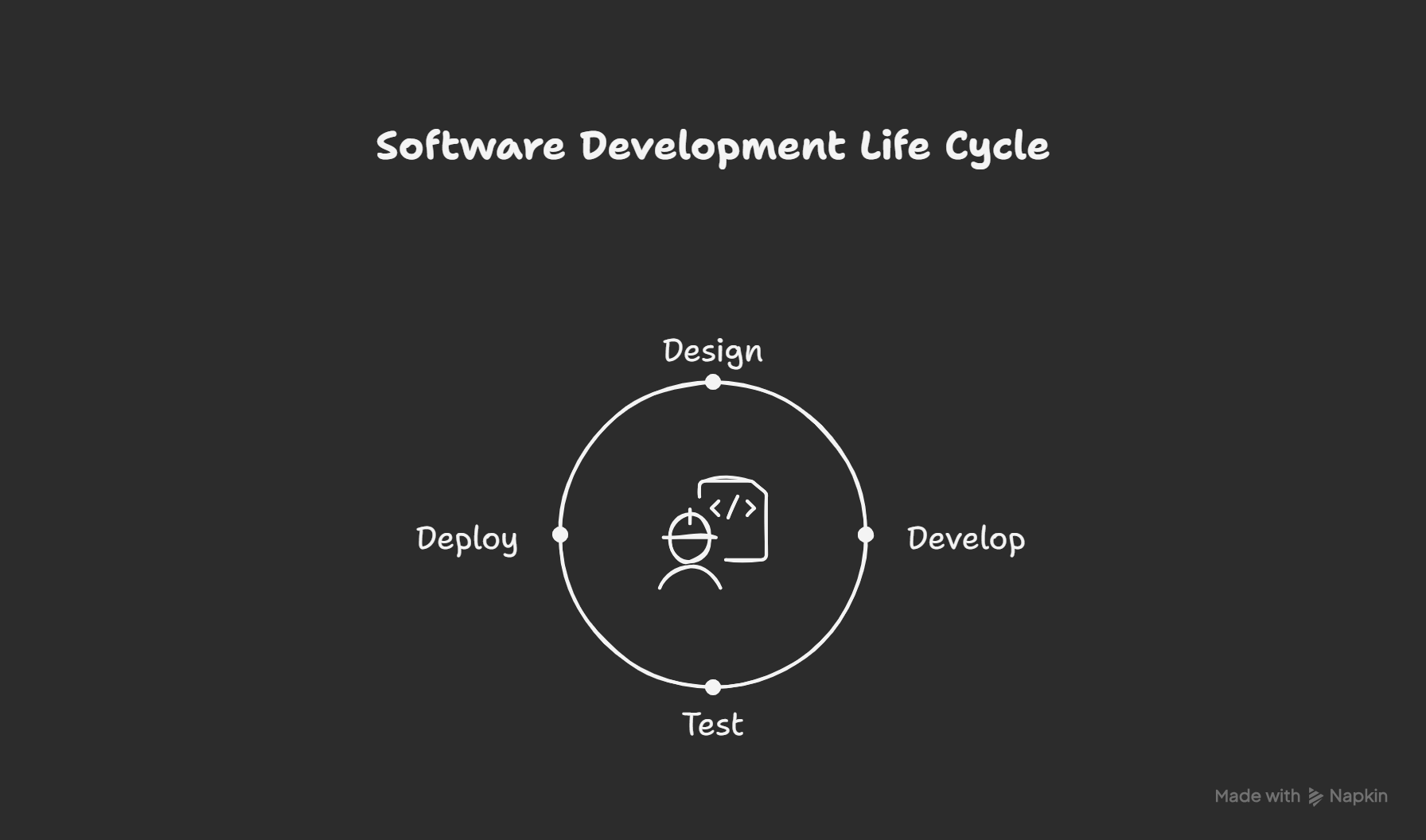
SDLC (Software Development Life Cycle) is a structured approach that guides developers through the process of designing, developing, testing, and deploying software efficiently and with high quality.
There are several ways to implement SDLC—let’s explore some of the commonly used models.
Popular SDLC Models:
Waterfall – Step-by-step, linear approach.
Agile – Iterative, flexible, with continuous feedback.
Spiral – Combines design and prototyping in stages.
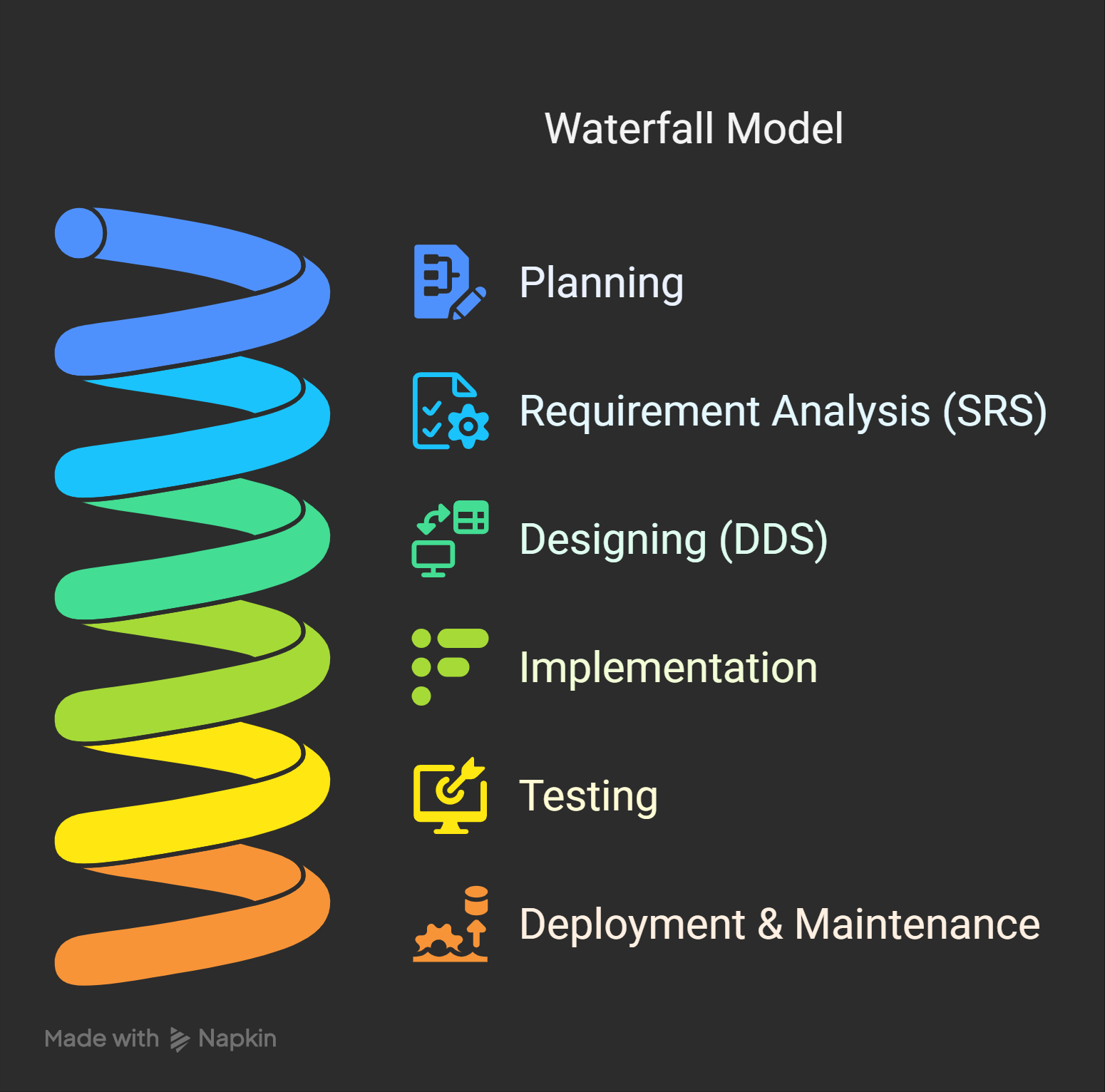
Phases of Waterfall Model:
Planning – Project goals and resources are defined.
Requirement Analysis (SRS) – Gather and document what the software must do.
Designing (DDS) – Create system architecture and technical design.
Implementation – Actual coding based on the design.
Testing – Ensure the software works as expected (debugging, verification).
Deployment & Maintenance – Release and support the software.
🏗️ Analogy: Like Building a House
You can’t change the foundation once you start building walls.
Each step depends on completing the previous one.
⚠️ Disadvantages:
Monolithic: Large, tightly coupled applications.
Single Point of Failure: One issue can impact the entire project.
Slow & Risky Updates: Pushing changes late is difficult and unsafe.
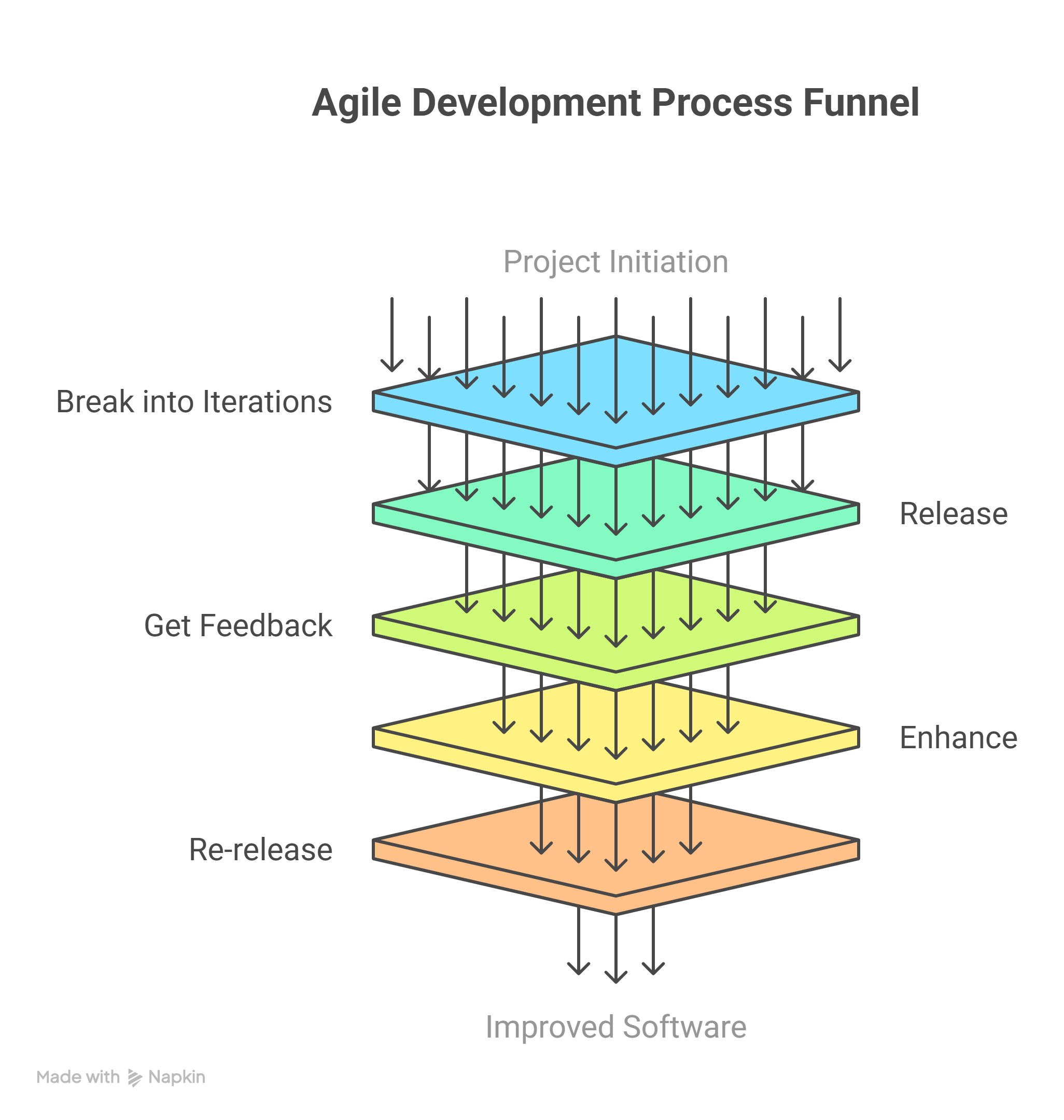
Agile Model – Move Fast, Deliver Often
Agile is a modern SDLC approach that breaks large projects into small, manageable chunks (called iterations), focusing on speed, collaboration, and flexibility.
🔁 Agile Workflow:
Break into Iterations – Divide the project into small, functional parts.
Release – Deliver working software quickly.
Get Feedback – Gather input from users or stakeholders.
Enhance – Improve based on feedback.
Re-release – Continuously deliver improved versions.
✅ Advantages:
Frequent Delivery – Faster time-to-market.
Client Collaboration – Regular communication and feedback.
Flexible to Change – Easy to adapt to new requirements.
Time-Saving – Focused efforts, quicker results.
⚠️ Disadvantages:
Less Documentation – Can lead to confusion later.
Maintenance Challenges – Frequent changes may affect long-term stability.
Ways to Implement Agile
Agile is not just one method — it’s a mindset supported by various frameworks and practices. Here are popular ways to implement Agile in real-world projects:
🔹 1. Scrum
Time-boxed Sprints (2–4 weeks)
Roles: Product Owner, Scrum Master, Development Team
Events: Daily Stand-ups, Sprint Planning, Sprint Review, Retrospective
🔹 2. Kanban
Visual board with tasks in To Do → In Progress → Done
Continuous delivery, no fixed sprints
Focus on limiting work in progress (WIP)
🔹 3. Extreme Programming (XP)
Emphasizes technical practices
Key practices: Pair Programming, Test-Driven Development (TDD), Continuous Integration
🔹 4. Lean Development
Inspired by Toyota
Focuses on eliminating waste, improving flow, and delivering fast
Prioritizes value to the customer
🔹 5. Crystal Methodology
People-centric, adaptable to team size and project criticality
Encourages team communication and minimal bureaucracy
what is Devops?
DevOps = Development + Operations
It's a culture that brings developers and IT operations teams together.
Goal: Accelerate delivery
Streamlined the software development and deployment process by automating repetitive tasks. Implemented CI/CD pipelines, which helped cut deployment time from 2 weeks to just 1 week, ensuring faster and more reliable releases.
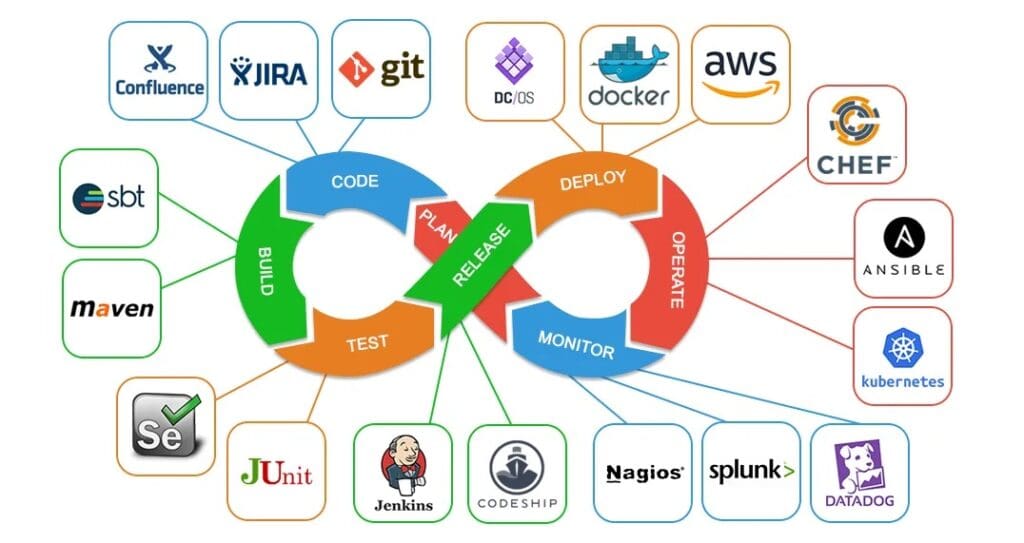
What a DevOps Engineer does:
Automates processes
- Builds scripts and tools to automate testing, building, and deployment.
Manages infrastructure
- Uses tools like Terraform or Ansible to create and maintain servers.
Sets up CI/CD pipelines
- Ensures code moves from development to production quickly and safely.
Monitors systems
- Uses tools like Prometheus, Grafana, or Datadog to track performance and catch issues.
Collaborates with teams
- Works with developers, testers, and operations to ensure smooth workflows.
Ensures security & compliance
- Implements policies and scans to keep systems secure.
Handles cloud platforms
- Manages services on AWS, Azure, or Google Cloud.
list of commonly used DevOps tools and technologies, categorized by function:
🛠️ CI/CD (Continuous Integration / Delivery)
Jenkins
GitLab CI/CD
GitHub Actions
CircleCI
ArgoCD
📦 Containerization & Orchestration
Docker – Package applications into containers
Kubernetes – Orchestrate and manage container clusters
Helm – Kubernetes package manager
📁 Version Control
Git
GitHub / GitLab / Bitbucket
⚙️ Infrastructure as Code (IaC)
Terraform
Ansible
Pulumi
CloudFormation (AWS)
☁️ Cloud Platforms
Amazon Web Services (AWS)
Microsoft Azure
Google Cloud Platform (GCP)
🔍 Monitoring & Logging
Prometheus + Grafana – Monitoring and visualization
ELK Stack (Elasticsearch, Logstash, Kibana)
Datadog / New Relic / Splunk
🔐 Security & Secrets Management
Vault (HashiCorp)
AWS Secrets Manager
SonarQube (for code quality & security scanning)


